About
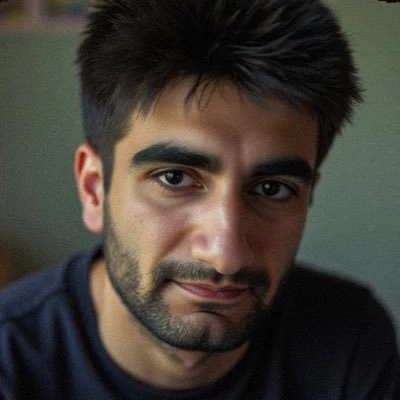
I'm Narek. I build agents that do real work, and tools that make math visible. I'm an AI engineer at Zencoder.
Agents at Zencoder
I joined Zencoder in 2024. I build coding agents: the agent reads an issue, works in the repo, and writes a patch. Most of my time goes to orchestration, evals, and the long tail of failures.
In May 2025 our team reached 70% on SWE-bench Verified, #1 at the time. Four agents tried each task once, and a critic picked the best patch. Alone, those four agents solved 60.8% to 64.6%.
manim-web
In January 2026 I started to port 3Blue1Brown's Manim to TypeScript. It became manim-web: math animations that run in the browser, with no Python. It has 484 GitHub stars, 31 forks and 82,191 npm downloads in the last 12 months. The Show HN post got 140 points.
Tools I build for myself
I like agents that do small, real jobs. One is a Claude Code skill that uses my iPhone through iPhone Mirroring. It takes a screenshot, picks a point, taps, and checks the result.
Right now I'm building two iOS apps. Ferry is a terminal for watching coding agents from my phone. Unison is a piano tuner that measures the beat between the strings of one note. Details are on the projects page.
Teaching
I taught deep learning at Moscow State University from 2021 to May 2026: neural architectures, optimization, regularization, and practical work in computer vision and NLP with PyTorch. My lecture notes from 2022 to 2025 are public. The 2025 set has a lecture on LLM agents. I also keep a Math and ML cheatsheet.
ML before agents
I started as an intern at ISP RAS on SVACE, a static code analyzer. Then I moved to ML. At the Burdenko Neurosurgery Institute I built models that grade brain tumors from MRI without a biopsy. At TrendMD I worked on article recommendations and speech-to-text for medical content. At Viasat I built video highlight extraction, movie recommendations and semantic search.
I have done ML competitions since 2018. I took 1st place in the RuATD 2022 binary task and 3rd on the SemEval-2023 AfriSenti multilingual track. Through ODS.ai I helped organize competitions with 1000+ participants. My profile is on Kaggle.
Research
My PhD at Lomonosov Moscow State University is about prompt injection: how LLM agents, coding assistants and LLM judges get manipulated, and how to defend them. I have 13 papers across LLM security, medical imaging and NLP. The NSA's May 2026 guidance on MCP security cites my MCP paper (PDF). The full list is on the research page and on Google Scholar.
Contact
Email is fastest.
- [email protected]
- github.com/maloyan
- linkedin.com/in/nmaloyan
- x.com/NarekMaloyan
- Google Scholar
- kaggle.com/narek1110